Shauna North
Ms. Overly
4th Hour
May 22, 2008
Ms. Overly
4th Hour
May 22, 2008
Fireweed
Fireweed, whose scientific name is Epilobium angustifolium is given its name because it is usually the first plant to establish itself after a fire. The fireweed is extremely important to the burnt ecosystem because it spreads easily and colonizes the primary community. Within a single year, fireweed is capable of taking over a completely charred area due to its rapidly spreading seeds.
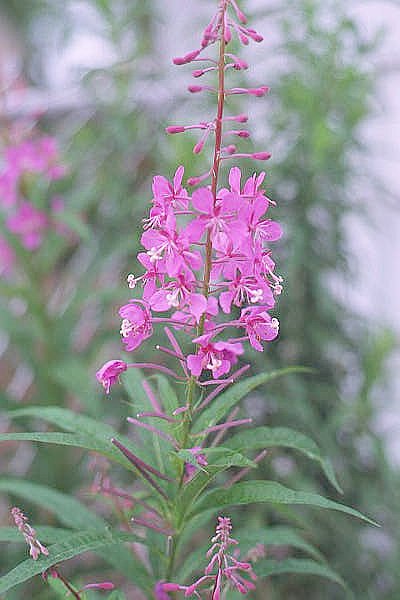
The beautiful blossoms of the fireweed are magenta pink to purple. Each flower has four petals that are clustered in groups of over fifteen per stem. The flowers begin to bloom at the bottom of the steam and slowly work their way up to the top. The blooming occurs in June through September. The stem can grow anywhere from one to seven feet tall, is thick and has an abundance of leaves growing up it. The fruit of fireweed comes in the form of seed pods with 300-500 seeds in each. When the seed pod splits, it releases small, fluffy, white seeds. The large amounts of seeds that are dispersed by the wind promote the rapid production of fireweed. The primary conditions for the growth of fireweed are full sunlight or with slight shade and little to no water. These requirements are the reason why fireweed is so successful after a fire.
Fireweed is key to primary succession because it is the first organism to take over an area after a large disturbance such as a fire. It colonizes the community and encourages the growth of other plant life, helping the new community replace the old one. Another advantage of the fireweed is that it has many healing qualities such as healing a sore throat, reducing the itching of eczema, a pain reducer, and more. Like most organisms, with benefits come drawbacks. Although fireweed remedies can benefit humans, it is poisonous for certain animals including dogs. Fireweed is very competitive with other species because it is an aggressive weed that is capable of taking over fields and killing plants in its way. Not only does it take over ecosystems, but it destroys the soil by extracting nutrients from it.
The Fireweed is native to Alaska as well as many other places around the world. It is said by some Alaskans that when the fireweed begins to go to seed, there are six weeks left until winter. Although this fact is not scientifically proven, there are many myths about fireweeds that seem to be true.

1 comment:
Great connections to succession and the role it plays in the pioneer community! Also, you do a good job of describing the positive and negative aspects of this flower to its ecosystem. You could have talked about the poisonous aspect of the plant being an anti-predator adaptation! Great job as always!
Post a Comment